Marine Internet of Things Market Sector Insights: Market Distribution, Scale, Developments, Forecast, and Industry Snapshot
"Executive Summary:
The global marine internet of things market size was valued at USD 682.00 billion in 2024 and is projected to reach USD 2411.23 billion by 2032, with a CAGR of 17.10 % during the forecast period of 2025 to 2032.
The global
Marine Internet of Things Market
is witnessing accelerated growth, fueled by increasing demand, evolving consumer preferences, and technological advancements. According to recent industry analysis, the market is expected to achieve a robust compound annual growth rate (CAGR) over the next several years. Key drivers include expanding applications across multiple sectors, a surge in investment in research and development, and the rapid adoption of innovative solutions. Industry leaders are focusing on strategic partnerships, product launches, and geographical expansion to capitalize on emerging opportunities and strengthen their market presence.
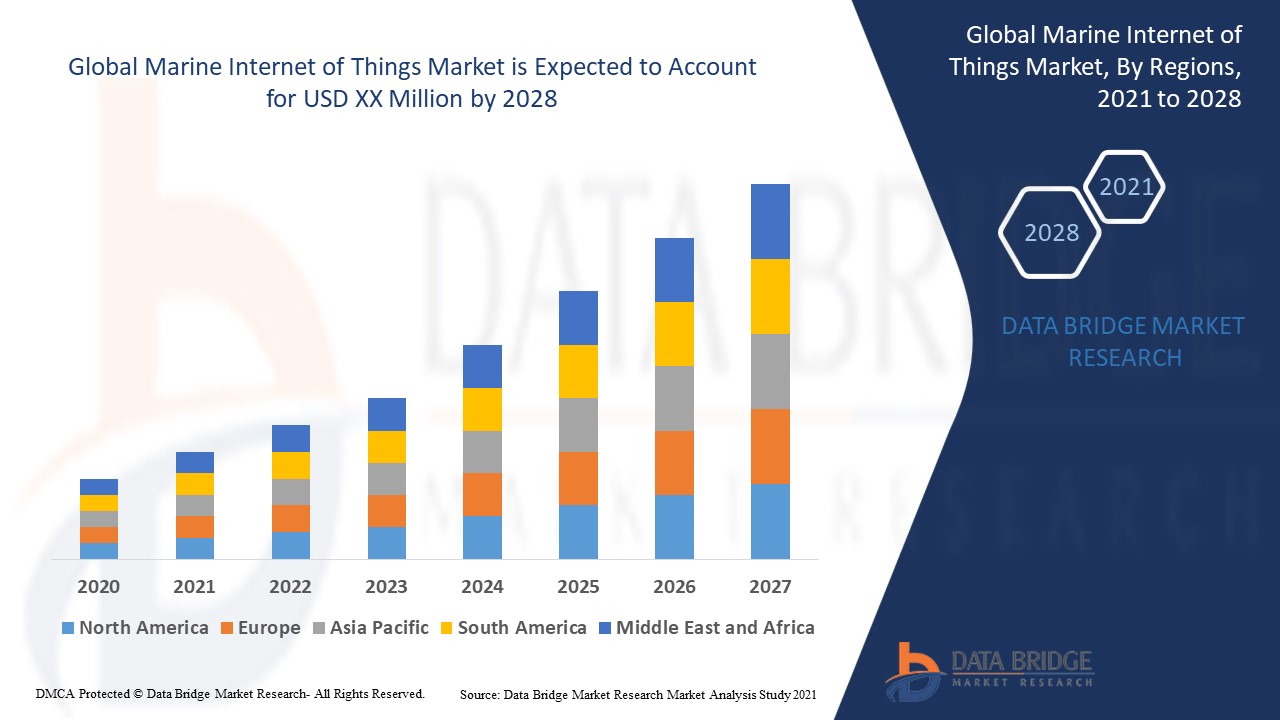
Market players are also responding to heightened sustainability concerns and regulatory shifts by adopting eco-friendly practices and optimizing supply chains. As competition intensifies, the Marine Internet of Things Market is expected to undergo a transformative phase with disruptive trends shaping the future landscape. North America currently leads in market share, while Asia-Pacific is anticipated to exhibit the highest growth due to increasing industrialization and favorable government initiatives. With strong momentum and innovation at the forefront, the Marine Internet of Things Market is well-positioned to deliver substantial value across its ecosystem in the years ahead.
Discover the latest trends, growth opportunities, and strategic insights in our comprehensive Marine Internet of Things Market report.
Download Full Report: https://www.databridgemarketresearch.com/reports/global-marine-internet-of-things-market
Marine Internet of Things Market Overview
- Segments*
- By Component: The global marine Internet of Things market can be segmented based on components into hardware, software, and services. Hardware components include sensors, RFID tags, and other devices used for data collection and communication. Software components consist of platforms, applications, and analytics tools for processing and analyzing the data collected. Services encompass consulting, maintenance, and support services for IoT solutions implementation and management.
- By Ship Type: Another segmentation criterion for this market is ship type, which includes categories such as commercial ships, naval vessels, and leisure boats. Each type of ship has specific IoT requirements and applications, driving the demand for tailored solutions in the marine IoT market.
- By Application: The marine IoT market can also be segmented by application, with key areas including fleet management, vessel tracking, predictive maintenance, safety and security monitoring, and environmental monitoring. These applications leverage IoT technologies to enhance operational efficiency, safety, and compliance in the maritime industry.
- Market Players*
- IBM Corporation: IBM offers IoT solutions for the maritime sector, focusing on predictive maintenance, asset tracking, and operational efficiency. The company's expertise in data analytics and cloud services positions it as a key player in the marine IoT market.
- Cisco Systems, Inc.: Cisco provides networking infrastructure and cybersecurity solutions for marine IoT applications, enabling secure data transmission and communication onboard ships. The company's networking expertise and IoT security solutions make it a leading player in the maritime industry.
- Siemens AG: Siemens offers a range of IoT solutions for the marine sector, including energy management systems, automation solutions, and digital twin technologies for ship optimization. The company's integrated approach to IoT in maritime applications sets it apart in the market.